
Services / API Servers and Microservices
Get your systems talking, so nobody retypes an order twice.
I connect the systems you use, so information moves on its own, and you’re told if it doesn’t.
Does this sound like you?
I ran my own IT businesses for over ten years before software, so I think like an owner, not just a developer.
- “We type the same order into two different systems, every single time.”
- “Nobody notices a sync has broken until a customer complains.”
- “We tried one of those cheap connector tools, and it broke the first time a system updated.”
- “Our books don’t match what actually happened in the shop.”
- “Half of someone’s week goes into copying information between systems.”
What I’d do.
Tell me what’s being retyped.
Describe the two systems and the information moving between them by hand. We pick the first connection worth fixing, not the whole business.
See one flow actually working.
Real orders, customers or payments move between your systems on their own, checked against what actually happened, before we connect anything else.
Agree what “working” means, then build it.
We write down what should happen, what counts as working, and what happens if it fails, before anything starts.
Proof.
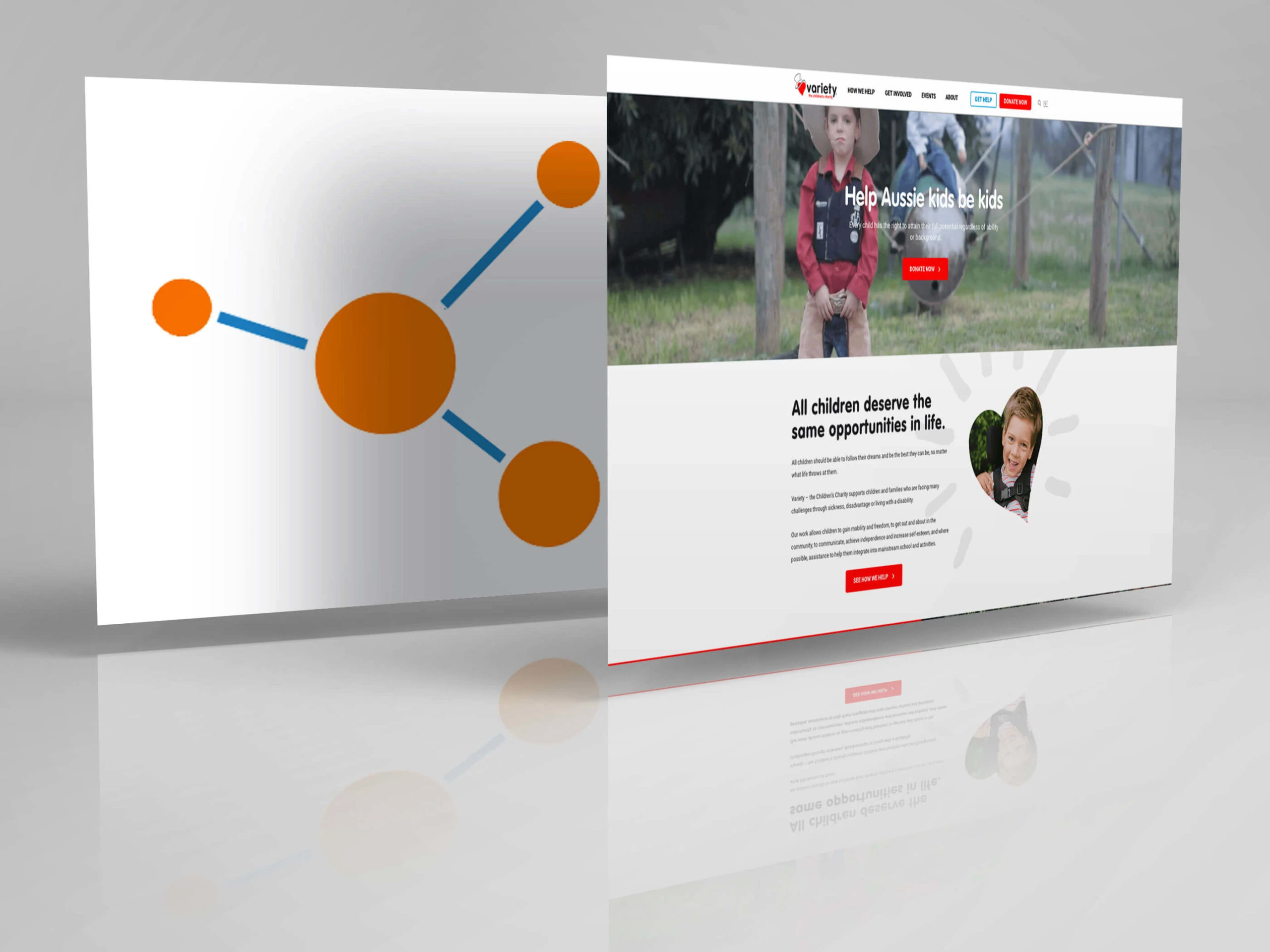
One update. Every other site gets it, on its own.
When staff updated the national site, the change reached every state site by itself, details and images included, without a manual export or a scheduled job that could fail quietly.
See the Variety project →Other systems built to connect, not stand alone.
- Rewards and loyalty systemBuilt so any website or app could plug in for stamps, vouchers and QR-code redemption through one connection.
This kind of work has run at real scale before: connecting loyalty and subscription services for South Africa’s Vodacom, MTN, Cell C and Telkom, in 2022.
“His deep knowledge of business sets him apart from other developers. He can guide in a way that maximises investment, not just what’s technically possible.”
Zackary AllnutCodeable expert and DDM Collective co-founder
How it starts, and what it costs.
You’re never committed to more than one piece.
- A free conversation.Tell me the two systems, what needs to move between them, and how you’d know if it stopped working.
- The written plan.Which systems connect first, what moves between them, how we’ll know it works, and a fixed quote for that first connection. Fixed fee, agreed in writing before it starts, and credited against the first piece. The plan is yours to keep.
- One working piece, at a fixed price.What I quote is what you pay for the agreed scope. Every piece after it is quoted before it starts, and you can stop after any piece and keep what’s built.
The first piece of work is the smallest connection we can prove works and hand over cleanly.
I review every enquiry myself. If I’m not the right person for it, I’ll tell you on the first call.
Not sure where to start? Answer seven short questions →For your technical person
Why this exists
Your business runs on multiple platforms: a website, a CRM, a payment system, an ERP, an email tool, a reporting dashboard. Each one works on its own, but they do not share data. You are copying information between systems, running manual exports, and losing time to workarounds.
You need custom APIs and integrations that connect these systems properly. Not a no-code connector that breaks when the vendor updates. A proper, purpose-built integration that your business can rely on.
What I build
- Custom API Servers: standalone Node.js API servers that power applications, handle business logic, and serve data to frontends, mobile apps, and third-party systems. See API developer in Cape Town.
- System Integrations: connect WordPress, WooCommerce, Shopify, or a custom application to CRMs, ERPs, payment gateways, email platforms, reporting tools, and other services the business depends on.
- Microservices: smaller, focused services that handle specific tasks, push notifications, rewards and loyalty programs, data sync, scheduled jobs, webhook handlers. See Microservices developer Cape Town.
- Third-Party API Integration: integrate with external APIs, FormStack, Bazaarvoice, Google Calendar, payment processors, shipping APIs, and any service that offers an API.
Tech stack
- Node.js, Express, REST API
- PHP, WordPress REST API, WooCommerce API
- Shopify API
- PostgreSQL, MongoDB, MySQL
- Docker
Node.js with Express is the primary API framework for new custom API servers. PHP APIs, WordPress REST endpoints, WooCommerce integrations, Shopify API integrations, and custom plugin API layers are built when the work belongs inside those platforms, using PostgreSQL, MongoDB, MySQL, or the platform-native database.
At a glance
- 1,900+BX1X API endpoints
- 300+Dental platform API endpoints
- Node.js + PHPAPI stacks shipped
- CRM+ERPs, payment systems & more
API projects and articles
Some of the work behind this service: large API servers, WordPress/PHP API layers, Shopify API integrations, and microservices.
- BX1X Business Operations Platform: my own operations platform, with 1,900+ API endpoints across billing, bookings, inventory, CRM, accounting, e-commerce and communications.
- Medical & Dental Practice Platform: a practice management platform with a custom API layer across patients, billing, appointments, dental charting, files and notifications, with 300+ API endpoints.
- Rewards & Loyalty Micro Node.js API Server: loyalty programs, stamps, vouchers, QR-code redemption, authentication, and admin workflows.
- Push Notification Micro Node.js API Server: push notification storage, Firebase Cloud Messaging delivery, registry tracking, device status updates, and audit reporting.
- ICA WordPress Course/Product Selector: custom WordPress plugin with a React SPA, PHP backend, custom MySQL tables, and REST API communication.
- Variety.org.au: a WordPress REST API content sync replacing a fragile XML cron import between a national site and state sites.
- Connect your WordPress site to the systems your business actually runs on: what affects API integration cost, risk, error handling, and production reliability.
How it works
- Tell me what needs connecting. Describe the systems, the data flow, and the problem. What platforms are involved? What data needs to move between them?
- I review the integration boundary. I assess access, source-of-truth, data flow and failure risk. If those details are still unclear, the next step is the written plan: a paid discovery at a fixed fee.
- We agree the first connection. The written quote defines the first outcome, acceptance test, dependencies, delivery window and change process before implementation starts.
Typical engagements
The first engagement is shaped around the smallest useful connection that can be accepted and handed over clearly.
- Connect one existing platform to another through an available API.
- Build the focused API or microservice needed to move and validate data.
- Map a complex multi-system workflow through paid discovery before implementation is quoted.
Vendors and platforms
Common integration targets: WordPress, WooCommerce, Shopify, Stripe, PayPal, Xero, HubSpot, Salesforce, Google services, FormStack, Bazaarvoice, and custom internal systems.
Support after delivery
The written quote defines the included acceptance and defect-correction boundary. Ongoing monitoring, vendor API changes, new requirements and later support are scoped separately. Accounts and a current handover pack are yours from the first piece, and code ownership is agreed in writing.
Specialist terms and job titles
Also described as: API development services, API integration services, custom API development, API development and integration, API servers, microservices, Node.js API server, PHP API developer, WordPress REST API, WooCommerce API integration, Shopify API integration, REST API development, third-party API integration, CRM integration, ERP integration, payment system integration, business systems integration.
More background
- API developer in Cape Town, the location-specific page.
- US services overview.
- About Anton, the full story.
- Full project portfolio.
- Client reviews.
- General site FAQ.
Questions owners ask.
Which of our systems can you connect?
Most business tools can be connected: your website, your online store, payment providers, accounting software, and CRM systems. If a system has a way for other systems to talk to it, I can usually connect it.
Do you only connect what we already have, or can you build something new?
Both. I can build a new system from scratch to power your business, or connect the systems you already use.
Can you connect our WordPress or online store to other systems?
Yes. This is one of the most common jobs I do: connecting a WordPress or WooCommerce site to accounting, payments, and other business tools.
What do you actually build this with?
Whatever fits your systems properly, rather than a one-size-fits-all tool. The specific technology is in the “For your technical person” section below.
What happens after it’s connected, if something breaks?
The written agreement sets out what’s included straight after the work is finished. Ongoing monitoring, bigger changes, or new requirements are agreed separately.
We’re not sure exactly what we need yet. Is that a problem?
No. If the systems or the data flow aren’t clear yet, the next step is the written plan, at a fixed fee, so we map it properly before quoting anything. You’ll know the price of each piece before it starts. See how a project with me works →
Related help.
Tell me which systems you retype between. I’ll tell you what connecting them involves.
+27 87 150 9305Monday to Friday, 09:00 to 20:00 SAST. Or email info@antondevilliers.com.