
Home / API Developer, Cape Town
An API developer in Cape Town who gets your systems talking.
Stop retyping the same order twice. I connect the systems your business already uses.
Does this sound like you?
- “We type the same order into two different systems, every single time.”
- “Nobody notices a sync has broken until a customer complains.”
- “We tried a cheap connector tool, and it broke the first time a system updated.”
- “Our books don’t match what actually happened in the shop.”
When a custom API is better than a no-code connector.
- You need business rules, not just field mapping.No-code tools are useful for simple hand-offs. Custom API development makes sense when the data needs checking, converting, permissions, a record of what happened, an automatic try-again when something fails, or numbers that must come out exactly right.
- Your integration is business critical.If a sync failure blocks orders, payments, reporting or customer support, it needs proper logging, error handling and recovery paths.
- The tool does not expose exactly what you need.Sometimes the work is not connecting two systems as they stand. It is building the missing layer between an outside service and the workflow your business actually runs.
1You need business rules, not just field mapping.
No-code tools are useful for simple hand-offs. Custom API development makes sense when the data needs checking, converting, permissions, a record of what happened, an automatic try-again when something fails, or numbers that must come out exactly right.
2Your integration is business critical.
If a sync failure blocks orders, payments, reporting or customer support, it needs proper logging, error handling and recovery paths.
3The tool does not expose exactly what you need.
Sometimes the work is not connecting two systems as they stand. It is building the missing layer between an outside service and the workflow your business actually runs.
What I’d do.
Tell me what’s being retyped.
Describe the two systems and the information moving between them by hand.
See one flow actually working.
Real orders or payments move between your systems on their own, checked against what actually happened.
Agree what “working” means, then build it.
We write down what should happen, and what happens if it fails, before anything starts.
Proof.
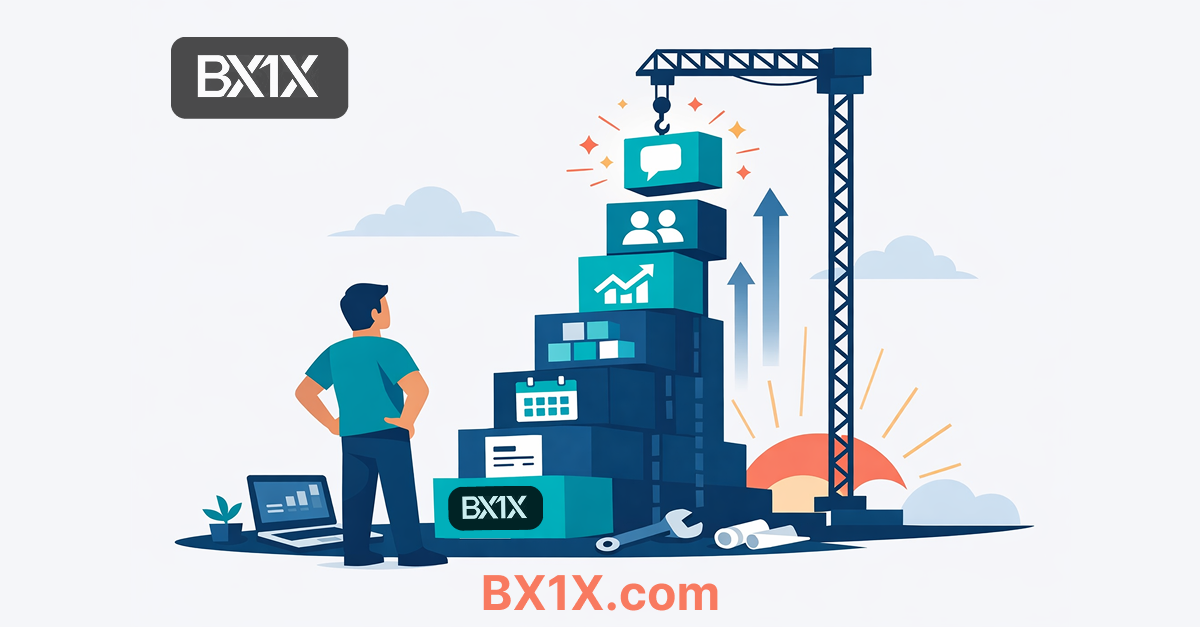
BX1X: one system instead of ten disconnected tools.
My own business platform, with billing, bookings, inventory, CRM and accounting all talking to each other.
See the BX1X project →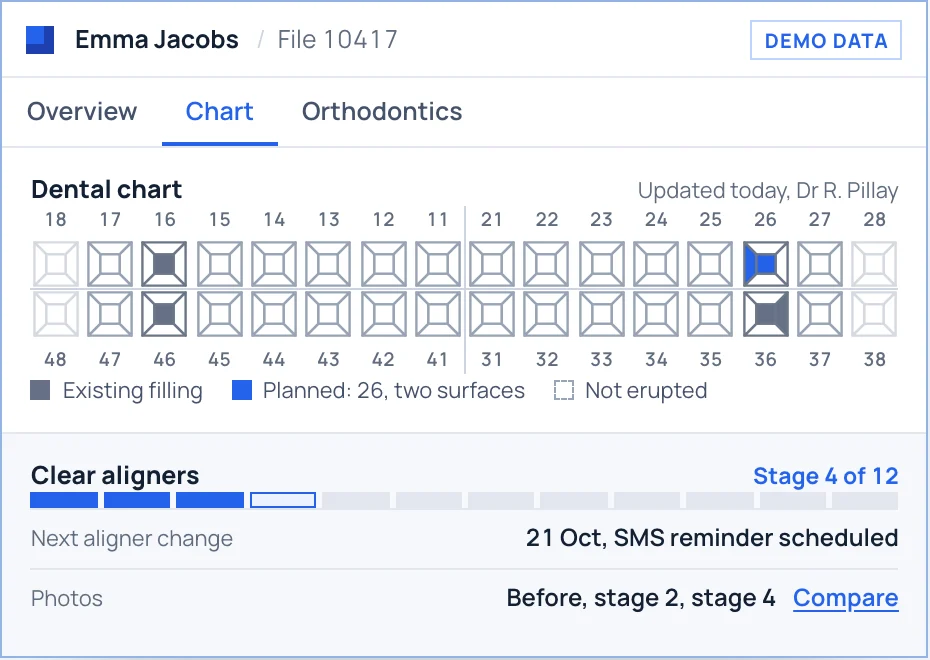
A practice platform, connecting the same kinds of systems.
Patient records, billing, medical aid claims, appointments and clinical notes, in one connected system.
See the practice platform project →Great, generous and extremely knowledgeable.
How it starts.
Send a short note about which two systems keep needing the same information typed in twice. That’s enough for a first conversation.
For your technical person
What this covers
- Default stack: Node.js is the default for new API servers; PHP, WordPress REST and Shopify APIs when the work belongs inside those platforms.
- Integrations built: Bazaarvoice, FormStack, Exigo ERP, WordPress REST API, South African payment gateways, Shopify API (App Bridge, webhook handling).
- Databases: PostgreSQL, MongoDB, MySQL. REST and gRPC.
- Reliability patterns: retry logic against third-party API endpoints, idempotent writes, and structured logging so a failure is easy to trace.
Background
- 1,900+BX1X API endpoints
- 300+practice platform API endpoints
- 26years in IT
- 175+client reviews
More API work
ICA WordPress course and product selector, a rewards and loyalty API server, a centralised cloud reporting system over WordPress and membership data, and a Datafeedr WooCommerce API customisation that preserved manually curated categories during API-driven product updates.
Specialist terms and job titles
Also described as: API developer Cape Town, systems integration developer, Node.js developer, REST API developer, ERP integration developer.
Questions owners ask.
Do you work as an API developer in Cape Town?
Yes. I build Node.js API servers, PHP APIs, WordPress and WooCommerce API layers, REST APIs and third-party integrations for Cape Town businesses and remote clients.
Do you build REST APIs or only third-party integrations?
Both. I build custom REST APIs from scratch and also connect existing systems such as WordPress, WooCommerce, Shopify, CRMs, ERPs, payment gateways and reporting tools. Node.js is my strongest API stack and main pick for new API servers, but I also build PHP and platform-native APIs when the project belongs inside WordPress, WooCommerce or Shopify.
What does a custom API project usually cost?
It depends on scope. A focused integration is usually a short project, while a full custom API server with authentication, data modelling and business logic is scoped after reviewing the systems involved.
Can you connect WordPress or WooCommerce to an ERP or CRM?
Yes. WordPress and WooCommerce integrations are common in my work. I can connect them to ERPs, CRMs, payment systems, reporting layers and custom business applications.
Can you build APIs for South African businesses outside Cape Town?
Yes. I work with South African businesses remotely. Most API development work happens through structured calls, shared specs, test environments and staged deployments.
Related help.
Tell me which two systems keep drifting apart.
+27 87 150 9305Monday to Friday, 09:00 to 20:00 SAST. Or email info@antondevilliers.com.